- Why Flipkart is Still One of the Best Ecommerce Platforms for Indian Brands in 2026
- Introduction
- The Growth of Flipkart in India
- How Flipkart Actually Works for Sellers
- Starting a Business on Flipkart: What Sellers Need to Know
- Why Product Listings Matter More Than Most Sellers Think
- Understanding Flipkart Seller Fees & Commission
- Main Flipkart Charges Sellers Should Understand
- Flipkart Fulfillment & Delivery System
- Flipkart Fulfillment (FBF)
- The Role of Advertising on Flipkart
- Why Many Sellers Fail on Flipkart
- The Future of Flipkart Ecommerce in India
- Final Thoughts
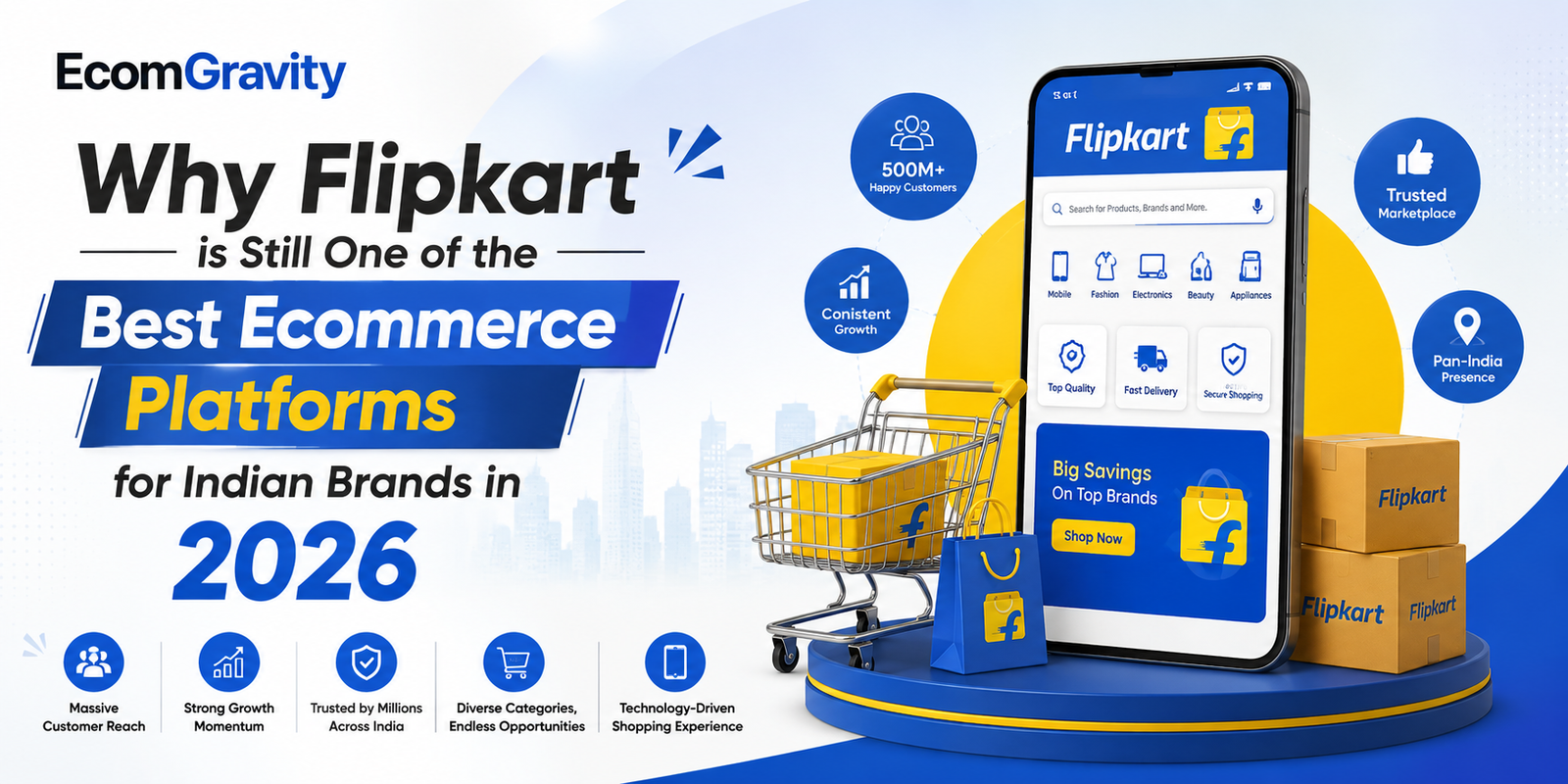
Why Flipkart is Still One of the Best Ecommerce Platforms for Indian Brands in 2026
Introduction
When businesses in India think about selling online, the first marketplace that usually comes to mind is Flipkart. Over the years, Flipkart has built a massive customer base across Tier-1, Tier-2, and Tier-3 cities, making it one of the strongest ecommerce platforms for brands looking to scale online sales.
Many new businesses believe that simply listing products on Flipkart automatically generates orders. But the reality is very different. Thousands of sellers join the platform every month, yet only a small percentage are able to build sustainable sales and long-term growth.
The biggest reason behind this gap is understanding how Flipkart actually works.
Unlike traditional retail, Flipkart is heavily driven by:
Product visibility
Competitive pricing
Fast fulfillment
Customer trust
Marketplace SEO
Advertising performance
Inventory consistency
Businesses that understand these areas properly are able to grow much faster than sellers who simply upload products without optimization.
In this guide, we will explore how Flipkart works for sellers, why many businesses fail to scale, how commissions and fulfillment systems work, and what strategies brands should follow to increase ecommerce sales successfully.
The Growth of Flipkart in India
India’s ecommerce industry has changed rapidly in the last few years. Customers are now more comfortable ordering products online because of:
Faster deliveries
Easy return policies
Better pricing
Digital payments
Wider product availability
This shift has helped platforms like Flipkart become one of the biggest online marketplaces in India.
One major reason behind Flipkart’s success is its deep penetration into smaller cities and regional markets. Unlike many ecommerce platforms that focus mainly on metro cities, Flipkart has built strong customer reach across emerging markets where online shopping is growing aggressively.
For businesses, this creates huge opportunities to:
Reach new customers
Expand nationwide
Increase online visibility
Build brand awareness
Scale revenue faster
Today, many D2C brands, wholesalers, manufacturers, and retailers are using Flipkart as a primary sales channel instead of depending only on offline markets.
How Flipkart Actually Works for Sellers
Flipkart operates on a marketplace model where multiple sellers can offer products within the same category. When customers search for a product, Flipkart’s system analyzes several factors before deciding which listings should appear at the top.
These factors include:
Product relevance
Product title keywords
Pricing competitiveness
Seller ratings
Delivery speed
Product reviews
Inventory availability
Advertising performance
This means selling on Flipkart is not just about having a good product. The platform rewards sellers who maintain better customer experience and optimized marketplace performance.
For example, two sellers may sell almost identical products, but the seller with:
better product images
stronger reviews
optimized pricing
faster shipping
better advertising
will usually receive more visibility and higher sales.
This is why professional marketplace management has become extremely important for ecommerce businesses.
Starting a Business on Flipkart: What Sellers Need to Know
Many beginners start selling without properly understanding the operational side of Flipkart. Before creating a seller account, businesses should first understand whether their products are suitable for online marketplaces.
Products that generally perform well on Flipkart include:
Fashion products
Home & Kitchen items
Mobile accessories
Beauty products
Lifestyle products
Electronics accessories
Daily utility products
Once product research is completed, businesses can register through Flipkart Seller Hub using:
GST Number
PAN Card
Bank Account
Pickup Address
Mobile Number
Email ID
After account approval, sellers can begin listing products.
However, the real challenge starts after listings go live.
Most sellers fail because they underestimate the importance of listing optimization and marketplace competition.
Why Product Listings Matter More Than Most Sellers Think
On Flipkart, product listings work like digital salespeople.
Customers cannot physically touch or test products online, so they depend entirely on:
Product titles
Images
Descriptions
Reviews
Ratings
to make purchasing decisions.
A weak listing immediately reduces customer trust.
For example, if a product has:
poor-quality images
incomplete descriptions
confusing titles
missing specifications
customers are more likely to leave the page and buy from competitors.
This directly impacts both:
conversion rates
product rankings
because Flipkart’s algorithm promotes products that generate better customer engagement.
Professional product listings usually include:
SEO-optimized titles
high-quality images
infographic creatives
detailed specifications
customer-focused descriptions
proper keyword targeting
This improves visibility while also increasing customer confidence.
Understanding Flipkart Seller Fees & Commission
One of the biggest mistakes new sellers make is calculating profits incorrectly.
Many businesses only consider product cost and selling price, while ignoring marketplace charges.
In reality, Flipkart deducts multiple fees from every order.
Main Flipkart Charges Sellers Should Understand
Commission Fee
Flipkart charges a commission percentage based on product category.
Approximate commission ranges include:
Category Approximate Commission
Fashion 5%–20%
Electronics 5%–12%
Home & Kitchen 10%–18%
Beauty Products 8%–15%
Grocery 3%–10%
These charges may vary depending on category updates and selling price.
Shipping Fee
Shipping charges depend on:
Product weight
Delivery location
Packaging dimensions
Fulfillment type
Heavy products generally have higher logistics costs.
Collection Fee
A small fee is charged for payment processing and transaction handling.
Fixed Fee
Flipkart also charges a fixed fee based on product price slabs.
Understanding all these costs is extremely important because many sellers unknowingly operate with very low profit margins.
Flipkart Fulfillment & Delivery System
Delivery speed plays a major role in ecommerce conversions.
Customers usually prefer products that offer:
faster shipping
reliable delivery
easy returns
To improve seller performance, Flipkart offers fulfillment support services.
Flipkart Fulfillment (FBF)
Under Flipkart Fulfillment:
sellers send inventory to Flipkart warehouses
Flipkart manages storage
packaging and shipping are handled by Flipkart
Products fulfilled by Flipkart often receive:
faster delivery tags
improved customer trust
better visibility
However, sellers also need to calculate:
storage charges
warehousing costs
inventory planning
before choosing this model.
The Role of Advertising on Flipkart
One of the biggest misconceptions among new sellers is:
“Products will sell automatically after listing.”
In reality, visibility is highly competitive.
Thousands of sellers compete in the same categories, which is why advertising becomes important.
Flipkart Ads help products appear:
in search results
category pages
recommendation sections
This increases:
impressions
clicks
product discovery
sales opportunities
Advertising becomes especially important for:
new product launches
competitive categories
seasonal sales
low-visibility products
However, simply running ads is not enough.
Successful advertising requires:
keyword optimization
bid management
campaign analysis
ROAS tracking
audience understanding
Without proper optimization, businesses often waste advertising budgets.
Why Many Sellers Fail on Flipkart
A large number of sellers leave marketplaces because they enter ecommerce without proper strategy.
Some of the most common reasons include:
poor product research
weak product listings
low-quality images
incorrect pricing
inventory stockouts
poor advertising management
lack of analytics understanding
Another major issue is unrealistic expectations.
Many businesses expect immediate sales growth, but marketplace success usually requires:
consistent optimization
customer trust building
data analysis
long-term strategy
Brands that continuously improve their marketplace operations generally achieve much better long-term growth.
The Future of Flipkart Ecommerce in India
India’s ecommerce industry is expected to grow rapidly over the next few years because of:
increasing smartphone usage
internet accessibility
digital payment adoption
growing online shopping behavior
This creates major opportunities for brands that establish strong online presence early.
At the same time, competition will also continue increasing. Sellers who focus only on basic product uploads may struggle to survive in the future marketplace ecosystem.
The brands that will grow successfully are the ones investing in:
ecommerce branding
marketplace optimization
customer experience
advertising strategy
operational efficiency
Final Thoughts
Flipkart has become one of the most important ecommerce platforms for Indian businesses looking to scale online sales. But successful selling on the platform requires much more than simply listing products.
Businesses must understand:
marketplace competition
pricing strategy
seller commissions
listing optimization
fulfillment systems
advertising performance
customer experience
Companies that continuously optimize these areas are able to improve visibility, increase conversions, and build sustainable ecommerce growth on Flipkart.