- E-Commerce vs. Quick Commerce: Best Model for Your Business?
- What Is E-commerce?
- What is Quick Commerce (Q-Commerce)?
- What is the Difference Between Quick Commerce and E-commerce?
- What Are the Advantages and Limitations of E-commerce?
- What Are the Benefits and Challenges of Quick Commerce?
- Don't worry we are here to Help You
E-Commerce vs. Quick Commerce: Best Model for Your Business?
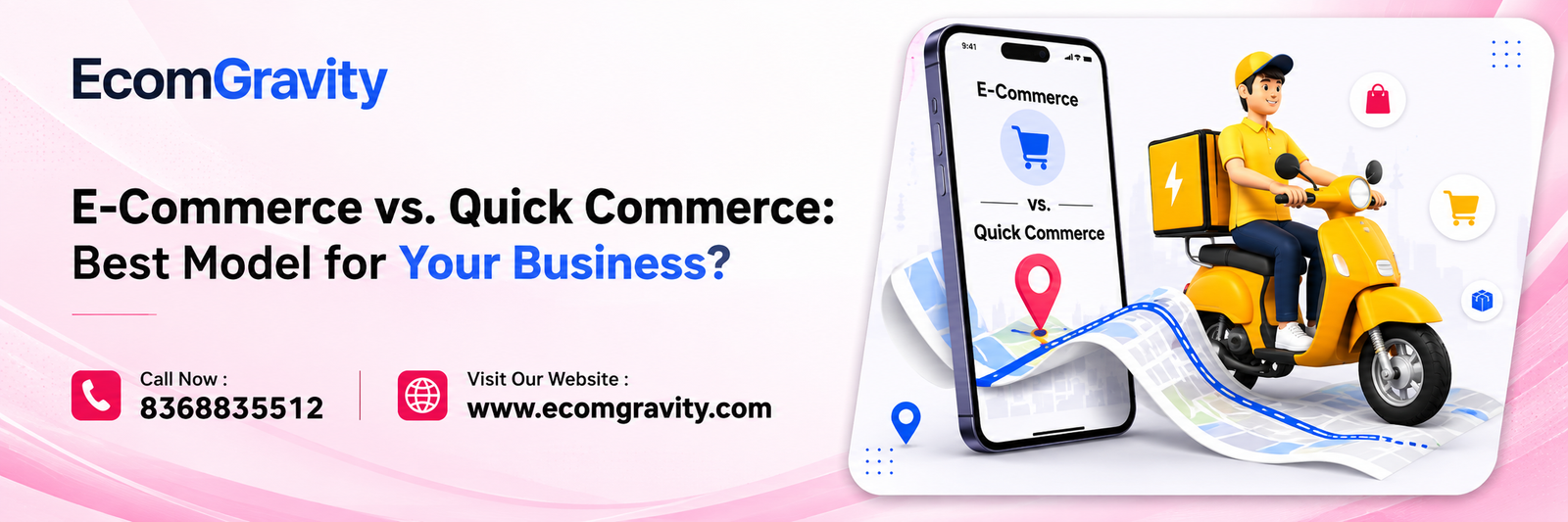
Who would have ever thought of getting products in under 10 minutes? But here we are getting all the daily essentials delivered with the comfort of our home in just minutes.
After the Covid-19 pandemic, the economy has faced a major shift from e-commerce business to quick deliveries. This move has confused many new sellers about whether they should choose between e-commerce vs quick commerce.
If you are one of those confused sellers, then be sure to read this article till the end to clear all your doubts and choose the right business model.
In this e-commerce vs quick commerce guide, you’ll learn about:
What is an e-commerce business?
What is a quick commerce business?
The difference between e-commerce vs quick commerce
The benefits and drawbacks of e-commerce
The advantages and limitations of quick commerce
Conclusion
FAQs
What Is E-commerce?
Electronic commerce, or e-commerce, refers to the buying and selling of goods and services over the internet without the need of visiting a physical store. The transaction takes place on websites or apps, where the buyer places an order and makes the payment, and the seller packs the order and sets it out for shipping.
In the e-commerce business, the delivery is expected under 7 days; however, the delivery date depends on the different marketplaces. Some of the successful e-commerce platforms are Amazon, Flipkart, Meesho, Myntra, Ajio, and more.
What is Quick Commerce (Q-Commerce)?
Q-commerce, or quick commerce, is also a type of e-commerce, but somewhat different. Where e-commerce delivers the items in hours or days, the quick commerce business model focuses on delivering the goods in minutes only.
The quick commerce business model operates on small warehouses, also known as dark stores, built in the metro cities to fulfil the demands of busy customers who need products at the last minute.
What is the Difference Between Quick Commerce and E-commerce?
Now that we have discussed the basics of e-commerce and quick commerce, let’s discuss the key differences between e-commerce vs quick commerce and what factors keep them apart.
Features E-commerce Quick Commerce
Delivery Time Typically 3 to 7 days Typically 10 to 30 minutes
Product Range Wide and diverse range of goods Only limited items like daily essentials
Technology Used Standard Advanced
Investment Lower investment because of centralised warehouses Higher investment because of micro warehouses
Customer Focus On variety, price, and information On speed and convenience
What Are the Advantages and Limitations of E-commerce?
Now that we have understood the difference between e-commerce and quick commerce, let us learn about the advantages and limitations that come with the e-commerce business model.
Advantages:
With the e-commerce model, your store can reach customers globally, which results in increased sales.
The e-commerce model enables customers to order from anywhere and from any device, without the need of visiting a traditional store.
The e-commerce business model is ideal for small businesses or new startups because of the low investment required.
Limitations:
New sellers are onboarding every day on e-commerce platforms, which results in increased competition.
Sellers can face various warehouse and shipping challenges, especially when shipping international orders.
The e-commerce model takes a longer time to deliver the goods, which can lead to a dissatisfied customer experience.
What Are the Benefits and Challenges of Quick Commerce?
We have discussed the pros and cons of e-commerce business; now is the time to discuss the benefits and challenges of quick commerce.
Benefits:
The quick commerce business model is ideal for sellers dealing in daily essential goods and groceries.
The fast delivery of goods provides a satisfied customer experience by delivering the products immediately.
Many quick commerce platforms offer 24/7 delivery of goods, which attracts students or workers working late at night.
Challenges:
High warehousing and logistical charges can usually impact the profit margins of businesses.
The quick commerce business allows the sale of limited goods only in comparison with traditional commerce.
Delivery partners often go through long working hours, stress and burnout because of the intense delivery pressure.
Conclusion: Which Business Model is Right For You?
Now that we know about everything related to e-commerce vs quick commerce, you might have realised which business model is ideal for you and your business. If you have further doubts, let’s clear them:
Choose E-commerce Business
If you own a small business or have a lower amount to invest, you want to offer a wide range of cost-effective products to broader areas, and your targeted customers don’t want the products instantly, then the e-commerce model is ideal for your business.
Choose Quick Commerce
If you can invest a high amount, deal in everyday essential or high-demand products, want to offer products within minutes, and sell low-cost items, then the quick commerce model is ideal for your business.
At Ecomgravity, we provide services related to both e-commerce account management and quick commerce account management. If you are a seller, you can avail yourself of the benefits of our expert account management.
Don't worry we are here to Help You
Is Quick Commerce Profitable for Small Businesses?
Quick commerce is not that profitable for small businesses, as it requires fast delivery, high order volumes, and strong operations, which results in increased expense. It is often seen that small businesses often struggle with managing their profit margins and high delivery expenses, which is why traditional e-commerce is a safer option for them.
Which Model Requires More Investment: E-Commerce or Quick Commerce?
The quick commerce model requires more investment in comparison with e-commerce, as it requires setting up warehouses or dark stores, managing delivery staff, and using the latest technology for updating the inventory. Whereas, e-commerce has lower investment costs because sellers can use established warehouses and third-party logistics for shipping.
Can D2C Brands Use Quick Commerce?
Yes, D2C brands can use quick commerce, but only for some products and locations, as quick commerce works well for essential items in the metro cities. Which is why many D2C brands depend on e-commerce as their main sales source and opt for quick commerce for additional sales growth.
Can a Business Use Both E-commerce and Quick Commerce Together?
Yes, a business can use both the e-commerce and quick commerce models together. E-commerce provides long-term growth and more reach for your products, whereas quick commerce offers customer flexibility for selected locations. The hybrid strategy allows businesses to fulfil different needs of customers with effectiveness.
Which Model Should a New Business Start With?
New businesses should start with an e-commerce model, as it requires lower investment and allows more control over business operations to scale sales easily. You can add quick commerce for expanding your business’s reach when you notice a stability in demand and resources.