How Meesho is Helping Small Businesses & Sellers Grow Faster in India (2026)
Introduction
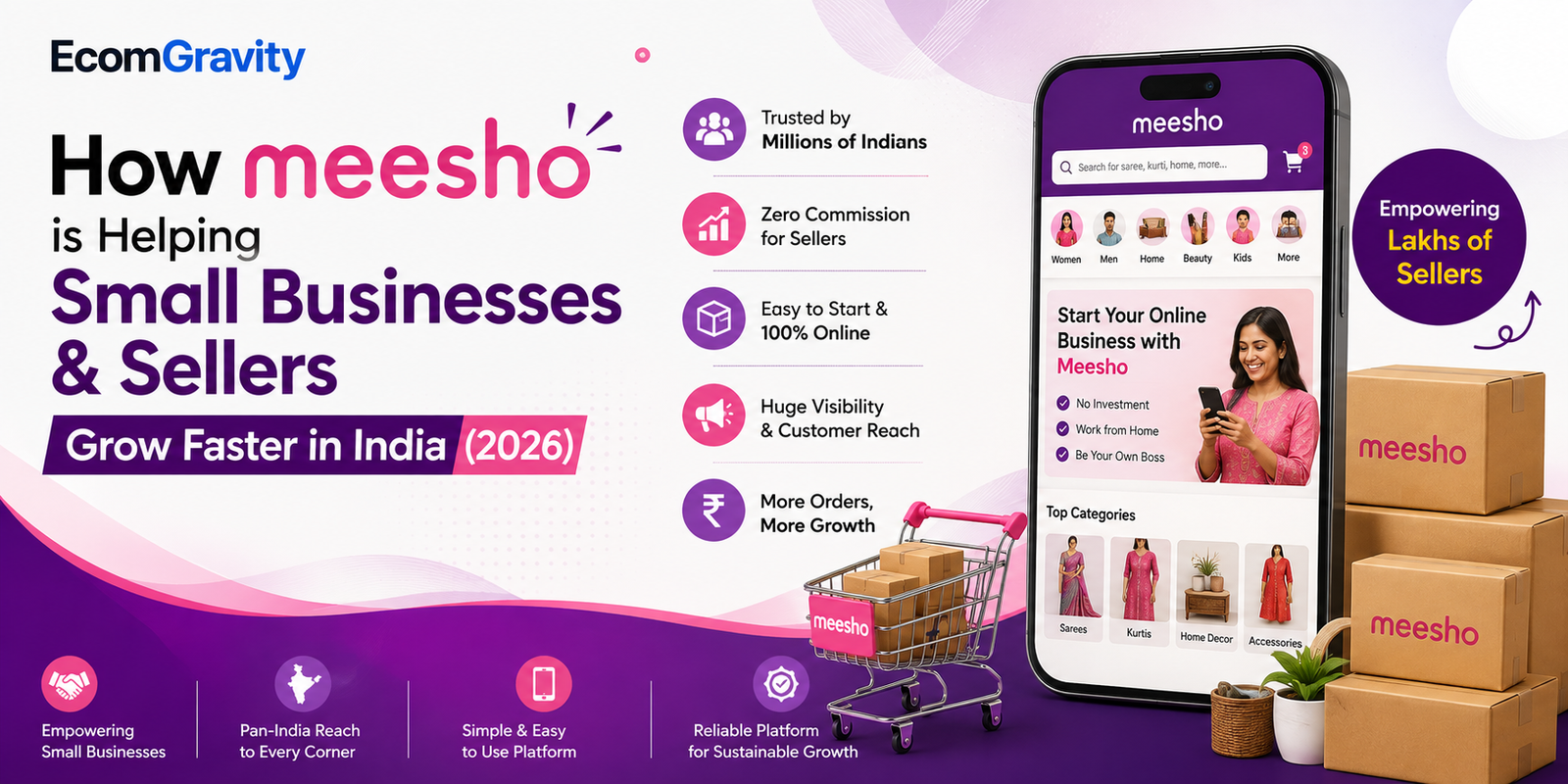
Over the last few years, Meesho has emerged as one of the fastest-growing ecommerce platforms in India, especially for small businesses, resellers, manufacturers, and first-time online sellers. Unlike traditional marketplaces that mainly target large brands and established sellers, Meesho has created opportunities for smaller businesses to enter ecommerce with lower operational barriers.
Today, many entrepreneurs and local businesses are using Meesho to:
Sell products online
Reach customers across India
Start ecommerce businesses with low investment
Generate additional income through reselling
Expand beyond local markets
Because of its simplified selling model and growing customer base, Meesho has become particularly popular among small sellers in Tier-2 and Tier-3 cities.
However, many businesses still do not fully understand how the platform works, how profits are calculated, or what strategies actually help increase sales on Meesho.
In this guide, we will explore how Meesho works for sellers, its commission structure, logistics system, product listing optimization, and the strategies businesses should follow to grow successfully on the platform.
Why Meesho Became So Popular in India
One of the biggest reasons behind Meesho’s rapid growth is its accessibility for small businesses and resellers.
Traditional ecommerce marketplaces often require:
advanced operational management
large advertising budgets
strong brand presence
high competition handling
Meesho simplified many of these challenges by creating a seller-friendly ecosystem.
The platform became especially popular because:
onboarding is simple
low-investment selling is possible
reselling opportunities are available
logistics are easier to manage
businesses can reach nationwide customers
This allowed many small sellers and home-based entrepreneurs to enter ecommerce for the first time.
How Meesho Works for Sellers
Meesho operates as a marketplace where suppliers and businesses list products that customers purchase directly through the platform.
Once an order is placed:
sellers receive order details
products are packed
logistics partners handle delivery
payments are processed after successful order completion
Unlike some marketplaces that focus heavily on premium branding, Meesho is strongly driven by:
affordability
mass-market demand
price competitiveness
high-volume selling
This makes the platform especially attractive for categories such as:
Fashion
Home & Kitchen
Beauty products
Daily utility products
Accessories
Lifestyle items
Starting a Business on Meesho
Many people believe that starting on Meesho is extremely easy and requires no planning. While onboarding is simple, successful selling still requires proper strategy.
Businesses can register through the Meesho Supplier Panel using:
GST Number
PAN Card
Bank Account Details
Mobile Number
Pickup Address
Once verification is completed, sellers can start uploading products.
However, product selection plays a very important role in marketplace success.
Products that generally perform better on Meesho are:
affordable products
trending products
high-demand utility products
visually attractive items
products with mass-market appeal
Because customer behavior on Meesho is highly price-sensitive, businesses must balance:
product quality
pricing
margins
shipping costs carefully.
Understanding Meesho Seller Charges & Commission
One of the biggest reasons many new sellers struggle is because they do not properly calculate marketplace costs.
Although Meesho is often known for low commission structures, sellers still need to understand all operational expenses before deciding pricing.
Main Charges Sellers Should Understand
Commission Charges
Meesho has historically positioned itself as a low-commission marketplace compared to traditional ecommerce platforms. However, seller charges may vary depending on:
product category
order value
shipping structure
platform updates
Businesses should regularly monitor seller policies for updated fee structures.
Shipping Charges
Shipping fees depend on:
product weight
packaging size
delivery location
Heavier products generally result in higher logistics costs.
Penalty Charges
Sellers may face penalties because of:
order cancellations
delayed shipping
policy violations
poor customer experience
Operational consistency is important to avoid unnecessary deductions.
Why Product Listings Matter on Meesho
Many sellers underestimate the importance of product listings on Meesho because they assume pricing alone drives sales.
While pricing is important, product presentation strongly affects:
customer trust
click-through rate
conversions
repeat purchases
Products with:
better images
clearer descriptions
proper sizing information
attractive presentation
usually perform better than poorly optimized listings.
Important Elements of a Good Meesho Listing
High-Quality Product Images
Images should:
clearly show the product
use clean backgrounds
highlight important features
look attractive on mobile devices
Since many Meesho users shop through smartphones, visual presentation becomes extremely important.
Product Descriptions
Descriptions should explain:
product features
material details
dimensions
usage information
value proposition
Clear descriptions reduce confusion and return rates.
Competitive Pricing
Pricing plays a major role on Meesho because customers often compare multiple sellers before purchasing.
However, businesses should avoid:
extremely low pricing
unsustainable margins
poor-quality sourcing
Long-term growth requires balancing affordability with profitability.
Logistics & Delivery on Meesho
One of the reasons Meesho attracted small businesses is its simplified logistics system.
The platform helps sellers manage deliveries through logistics partners, making nationwide shipping easier even for smaller businesses.
However, delivery performance still impacts:
seller ratings
customer trust
return rates
account health
Businesses that maintain:
faster dispatch times
proper packaging
inventory availability
usually achieve better marketplace performance.
Why Many Sellers Fail on Meesho
A large number of sellers enter Meesho expecting immediate profits without understanding marketplace competition.
Some of the most common reasons sellers struggle include:
poor product selection
weak product images
low-quality products
incorrect pricing strategy
high return rates
poor inventory management
inconsistent order fulfillment
Another major issue is copying competitors blindly instead of building proper product differentiation.
Successful sellers continuously analyze:
customer demand
pricing trends
product performance
return patterns
operational costs
to improve profitability over time.
The Future of Meesho in Indian Ecommerce
India’s ecommerce industry is expanding rapidly, especially in smaller cities where online shopping adoption is increasing every year.
Meesho’s focus on:
affordability
mass-market accessibility
reseller-driven growth
small business participation
positions it strongly within the growing ecommerce ecosystem.
As competition increases, sellers who focus on:
operational efficiency
customer experience
better product sourcing
optimized listings
will have stronger long-term growth opportunities.
Final Thoughts
Meesho has created significant opportunities for small businesses, resellers, and new ecommerce entrepreneurs in India. The platform allows businesses to enter online selling with lower operational barriers while reaching customers across multiple cities.
However, successful selling on Meesho still requires:
proper product selection
optimized listings
pricing strategy
operational consistency
customer satisfaction
Businesses that focus on building trust, maintaining product quality, and optimizing marketplace performance are more likely to achieve sustainable ecommerce growth on the platform.